




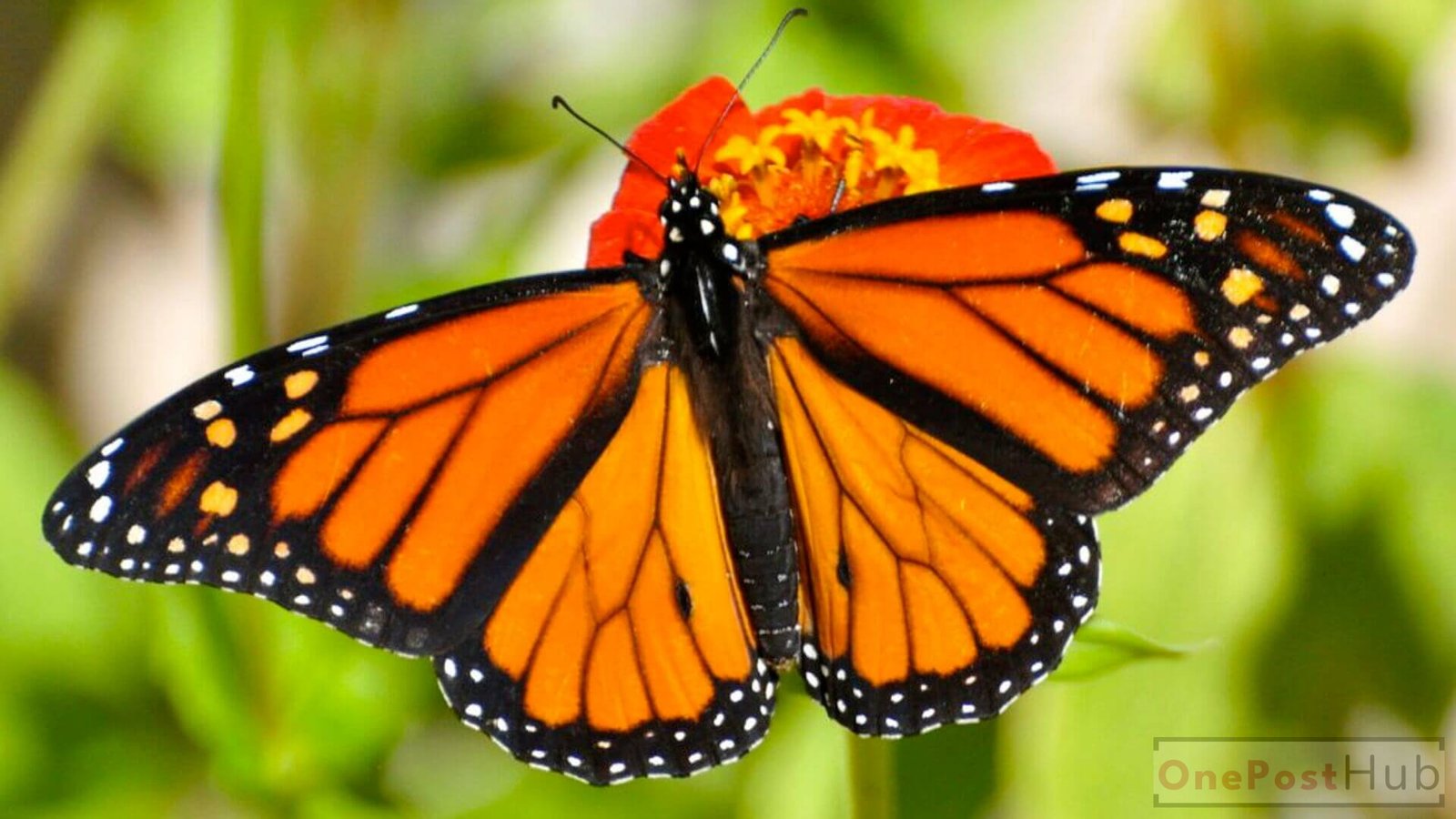

The monarch butterfly (Danaus plexippus) is one of the most recognizable insects in the world, famous for its bright orange-and-black wings and its extraordinary long-distance migration. This species is widely studied due to its ecological importance and its close connection to environmental health.
Key Facts About Monarch Butterflies
- Scientific name: Danaus plexippus
- Average wingspan: 3.5–4 inches (9–10 cm)
- Lifespan:
- Summer generations live 2–6 weeks
- Migratory “super generation” can live up to 8–9 months
- Summer generations live 2–6 weeks
- Diet:
- Caterpillars feed only on milkweed plants
- Adult monarchs feed on nectar from flowering plants
- Caterpillars feed only on milkweed plants
- Defense mechanism: Monarchs absorb toxins from milkweed, making them poisonous to many predators
Their bright coloration warns predators and helps reduce the risk of being eaten.
Monarch Butterfly Habitat
Monarch butterflies are primarily found across North America, with smaller populations in Central America, South America, Australia, and some Pacific regions.
Preferred Habitat Conditions
Monarchs rely on habitats that provide:
- Milkweed for laying eggs and feeding caterpillars
- Nectar-producing plants for adult butterflies
- Open and sunny areas such as:
- Meadows and grasslands
- Roadsides and agricultural edges
- Home gardens and urban parks
- Meadows and grasslands
Seasonal Habitat Shifts
- Spring and summer: Monarchs expand their range across the United States and southern Canada
- Fall and winter: They gather in specific overwintering locations
Habitat loss, especially the decline of milkweed, has significantly affected monarch populations.
Monarch Butterfly Migration Explained
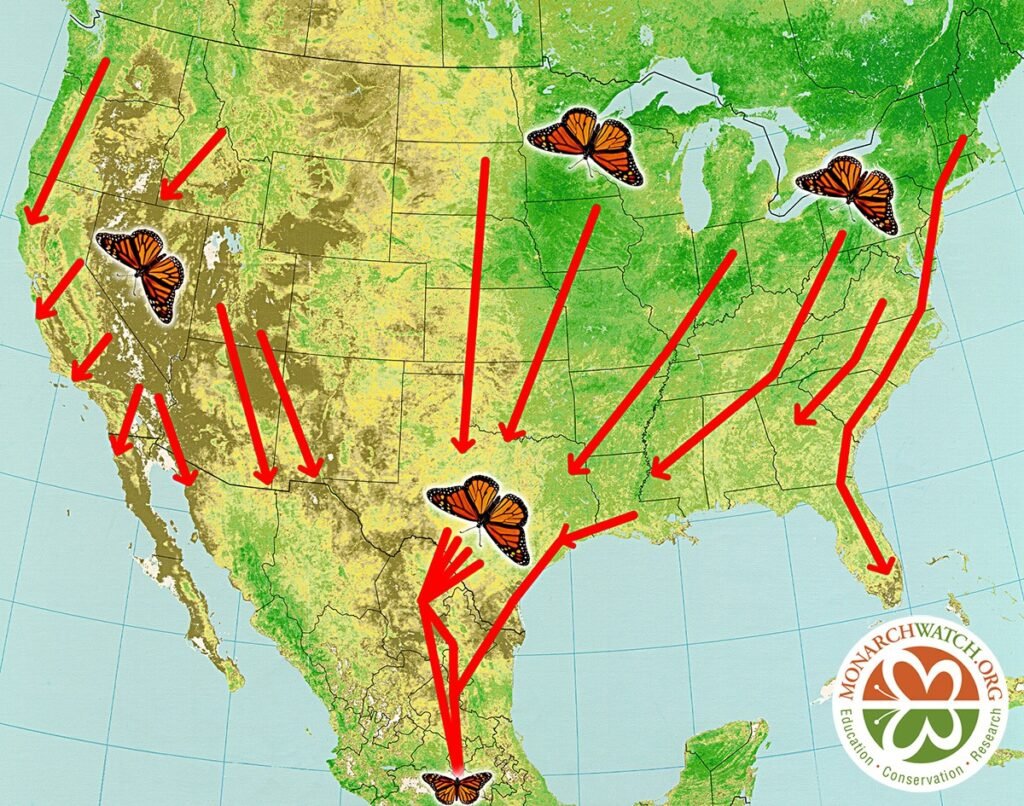
Monarch butterfly migration is one of the most remarkable phenomena in the insect world.
Migration Patterns
- Monarchs east of the Rocky Mountains migrate up to 3,000 miles to overwintering forests in central Mexico
- Western monarchs migrate to coastal California
- Migration occurs over multiple generations, with no single butterfly completing the entire round trip
How Monarchs Navigate
Scientists believe monarchs use:
- The position of the sun
- An internal biological clock
- Earth’s magnetic field
Migration typically begins in late summer to early fall, triggered by changes in temperature and daylight.
Importance of Monarch Butterflies
Monarch butterflies play a vital role in ecosystems by:
- Supporting pollination
- Acting as indicators of environmental health
- Promoting conservation awareness and education
Their population trends help scientists understand broader environmental changes.
Threats and Conservation Status
Monarch butterfly populations have declined over recent decades due to:
- Habitat destruction
- Climate change
- Pesticide and herbicide use
- Loss of milkweed plants
Conservation efforts focus on restoring habitats, protecting overwintering sites, and increasing milkweed availability.
How You Can Help Monarch Butterflies
You can support monarch conservation by:
- Planting native milkweed and nectar-rich flowers
- Reducing or eliminating pesticide use
- Supporting conservation organizations
- Creating butterfly-friendly gardens
Conclusion
The monarch butterfly is an extraordinary species known for its unique life cycle, specialized habitat, and long-distance migration. Protecting monarch butterflies helps preserve biodiversity and supports healthier ecosystems, making conservation efforts essential for the future.


Snow Leopard: Habitat, Diet, and Key Facts
Top 5 Amazing Facts About Whale Sharks