




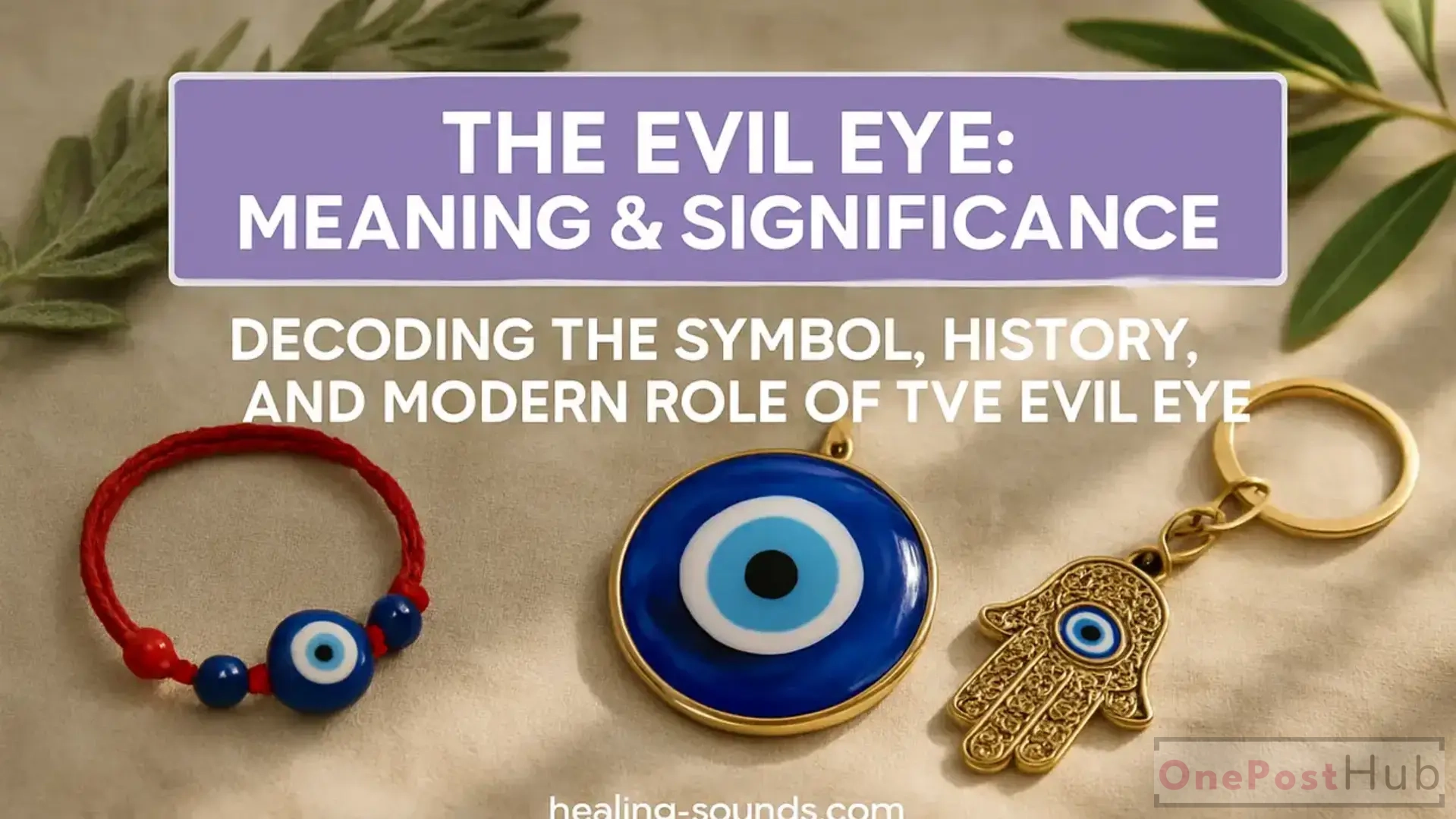

The evil eye is one of the oldest and most widespread spiritual symbols in human history. Found across continents and cultures, the concept revolves around the belief that envy or ill intention can cause harm through a powerful glare. While interpretations vary by region, the underlying meaning remains connected to protection, energy, and the unseen forces believed to influence human life. Understanding the deeper symbolism behind the evil eye reveals why it continues to hold cultural and spiritual significance today.
The Evil Eye Belief Dates Back Thousands of Years
One of the most fascinating aspects of the evil eye meaning is its ancient origin. Historical records suggest that belief in the evil eye can be traced back to ancient civilizations such as Greece, Rome, and Mesopotamia. References to harmful gazes appear in early texts and folklore, where envy was believed to manifest as negative energy capable of causing illness, misfortune, or bad luck. Over time, this belief spread across the Mediterranean, the Middle East, South Asia, and parts of Latin America, adapting to different cultural traditions while maintaining its core meaning.
It Represents Protection More Than Harm
Although the term “evil eye” may sound negative, the symbol itself is primarily associated with protection. The iconic blue eye-shaped amulet, often called the Nazar, is worn or displayed to guard against jealousy and harmful intentions. Rather than symbolizing evil, the charm acts as a shield that reflects negative energy back to its source. This protective meaning explains why the symbol is commonly found in jewelry, home décor, and even clothing across various cultures.
The Color Blue Holds Cultural Significance
The traditional evil eye charm is usually blue, and this color is not chosen randomly. In many ancient cultures, blue was believed to represent the sky and divine protection. Some interpretations suggest that people with blue eyes were once thought to have particularly strong gazes, leading to the association between the color blue and the evil eye. Today, the blue hue is widely recognized as a symbol of calmness, spiritual awareness, and energetic balance.
Different Cultures Interpret It in Unique Ways
While the core belief remains consistent, the evil eye meaning varies slightly across cultures. In Middle Eastern and Mediterranean traditions, it is closely tied to envy and social protection. In South Asian cultures, similar beliefs exist regarding “nazar,” where protective rituals are performed to remove negative energy. In Latin American traditions, the concept of “mal de ojo” reflects the belief that excessive admiration can unintentionally cause harm, especially to children. Despite regional differences, the shared theme is the acknowledgment of energy and intention as powerful forces.
The Symbol Remains Relevant in Modern Spirituality
In contemporary society, the evil eye has evolved beyond folklore into a widely recognized spiritual and fashion symbol. Many people wear evil eye jewelry as a reminder to protect their energy and remain mindful of their surroundings. Even those who do not strictly follow traditional beliefs often view the symbol as a cultural emblem of protection and positivity. Its continued presence in modern design, social media, and spiritual practices demonstrates how ancient beliefs can adapt while preserving their original meaning.
Conclusion
The meaning of the evil eye goes far beyond superstition. Rooted in ancient history, shaped by diverse cultures, and sustained through generations, it symbolizes awareness of envy, the power of intention, and the desire for protection. Whether viewed as a spiritual safeguard or a cultural tradition, the evil eye remains a powerful reminder of humanity’s long-standing belief in unseen energies and the importance of guarding one’s well-being.
faqs
Frequently Asked Questions About the Evil Eye Meaning
What is the true meaning of the evil eye?
The true meaning of the evil eye centers on the belief that negative energy, particularly envy or jealousy, can cause harm to a person’s well-being, success, or happiness. Across many cultures, it is believed that a strong glare fueled by ill intention can bring misfortune, illness, or bad luck. However, the symbol of the evil eye itself is not meant to represent harm. Instead, it serves as a protective emblem designed to shield individuals from negative energy and reflect harmful intentions away from them.
Is the evil eye a religious symbol?
The evil eye is not tied to one specific religion but appears across multiple spiritual and cultural traditions. It is found in Middle Eastern, Mediterranean, South Asian, and Latin American cultures, among others. While some religious communities acknowledge the concept of harmful envy, the evil eye symbol itself is more cultural than doctrinal. Many people wear or display it for traditional or spiritual reasons without associating it with formal religious practice.
Why is the evil eye usually blue?
The evil eye charm is traditionally blue because, in ancient Mediterranean cultures, blue was associated with protection and divine energy. Some historical interpretations suggest that blue eyes were once believed to carry strong gazes, leading to the symbolic use of the color. Over time, blue became the standard color for evil eye amulets, symbolizing calmness, spiritual awareness, and protective strength. Today, while the classic design remains blue, variations in other colors also exist with different symbolic meanings.
Can wearing an evil eye bring bad luck?
Wearing an evil eye charm is widely believed to provide protection rather than bring bad luck. The symbol is intended to guard against negative energy and harmful intentions. Superstitions sometimes arise when an evil eye bracelet breaks or falls off, with some traditions interpreting this as a sign that it has absorbed negativity. However, these interpretations vary by culture, and there is no universal belief that wearing the symbol causes harm.

Other Articles

Aleksandra Plus and the Future of Plus-Size Fashion
Fascisterne: Meaning, History, and Ideology