




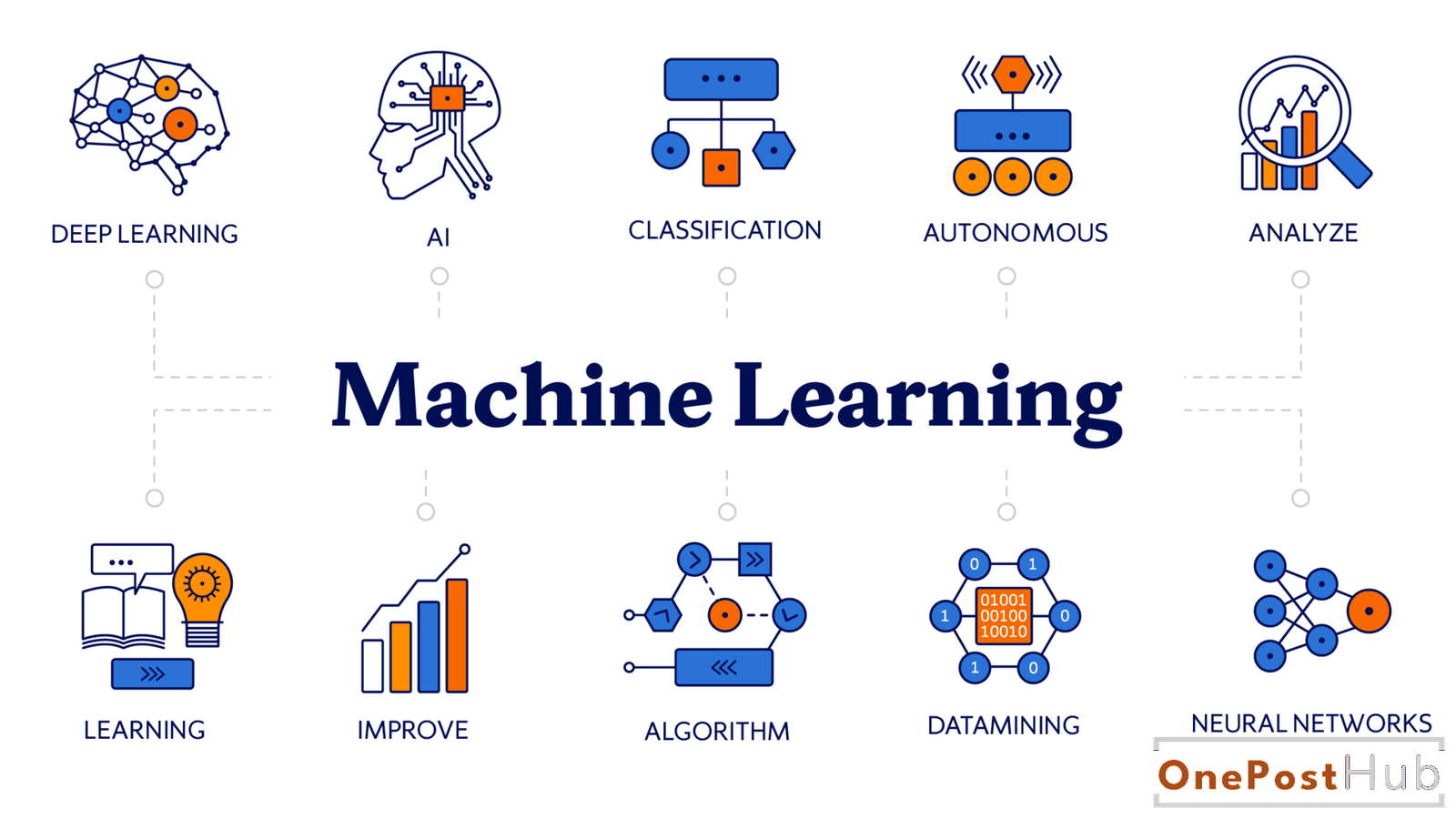

Machine learning is a term that is often misunderstood, especially when phrased informally as “machines are learning.” In simple words, machine learning refers to the ability of computers to learn patterns from data and improve their performance without being explicitly programmed for every single task. Instead of following rigid step-by-step instructions written by a human for every situation, machines use algorithms to analyze data, recognize patterns, and make decisions or predictions.
Understanding the Meaning of Machine Learning
Machine learning is a branch of Artificial intelligence that focuses on building systems capable of learning from data. Traditional computer programs work based on fixed instructions. For example, if you want a program to sort numbers, you give it exact rules. In machine learning, however, the system is given data and allowed to discover patterns on its own.
When people say “machines are learning,” they mean that computers are improving their performance over time by analyzing large amounts of information. The learning process involves training algorithms using data so the system can make accurate predictions or decisions in new situations.
How Machines Actually Learn
Machines learn through a process called training. During training, an algorithm is fed large amounts of data. The algorithm looks for patterns and relationships within that data. Over time, it adjusts its internal parameters to reduce errors and improve accuracy.
For example, if you want a machine to recognize cats in pictures, you would show it thousands of labeled images of cats and non-cats. The system gradually learns what features define a cat. Once trained, it can analyze new images and predict whether a cat is present.
This process does not involve understanding in the human sense. Machines do not “think” or “know.” They perform mathematical calculations to find patterns that best match the data they were trained on.
Different Types of Machine Learning
Machine learning generally falls into three main categories. Supervised learning involves training a model on labeled data, meaning the correct answers are already known. Unsupervised learning uses unlabeled data and allows the system to find patterns or groupings on its own. Reinforcement learning involves training systems through rewards and penalties, often used in robotics and game-playing AI.
Each type serves different purposes, but the core idea remains the same: improving performance through experience with data.
Real-World Examples of Machine Learning
Machine learning is already part of everyday life. Search engines use it to rank results. Streaming platforms use it to recommend movies based on viewing history. Online stores use it to suggest products. Even email systems rely on machine learning to filter spam messages.
Voice assistants and facial recognition systems also rely on advanced machine learning models. These technologies analyze patterns in speech or images to provide accurate responses.
Why Machine Learning Matters
Machine learning is important because it allows systems to handle complex tasks that would be impossible to program manually. Modern data is vast and constantly growing. Traditional programming cannot keep up with the need to analyze billions of data points quickly.
By allowing machines to learn from data, industries such as healthcare, finance, transportation, and education can improve efficiency, detect patterns faster, and make better predictions.
Common Misconceptions About Machines Learning
One common misconception is that machines are becoming conscious or self-aware. In reality, machine learning systems operate based on algorithms and data. They do not possess emotions, awareness, or independent intentions.
Another misunderstanding is that machine learning works perfectly. In truth, models depend heavily on the quality and quantity of data. Poor data leads to inaccurate predictions.
Conclusion
In simple terms, when we say “machines are learning,” we are describing systems that improve their performance by analyzing data and identifying patterns. Machine learning is a powerful branch of artificial intelligence that enables computers to solve complex problems without being explicitly programmed for every situation. While machines do not think like humans, their ability to process and learn from massive amounts of information is transforming industries and shaping the future of technology.


Windsurfer Sailboards: Ride the Wind & Waves
Top 7 Ways to Convert Spotify to MP3